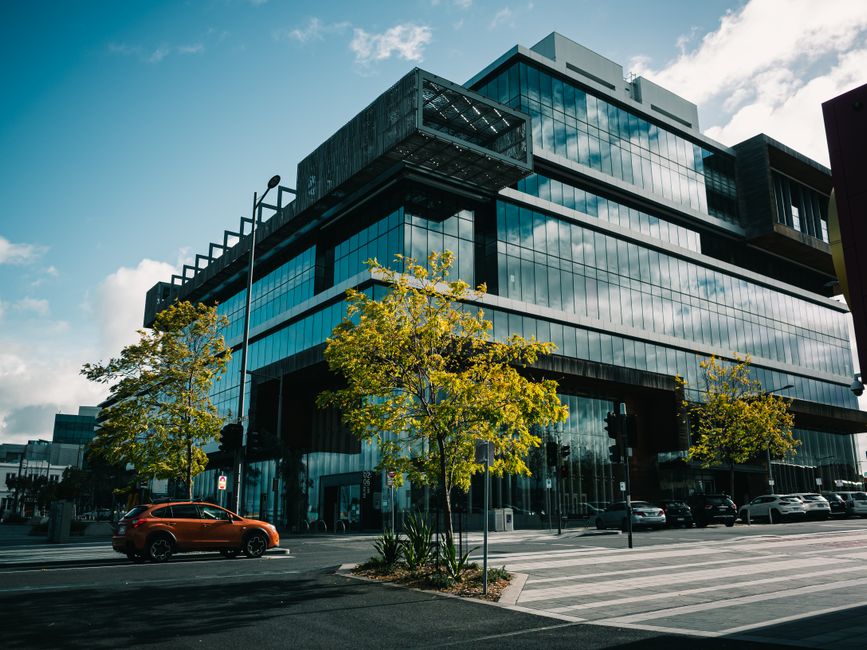
Tasmanian business leaders gathered at the Chamber of Commerce on Davey Street last week voiced a common concern: the global trading environment has become unpredictable, and fast-moving companies are already gaining edge over slower competitors.
The past six months have seen dramatic shifts in international dynamics. Escalating Middle Eastern tensions, combined with friction between major economic powers, have disrupted shipping routes and spiked insurance costs for freight. For Tasmania's exporters—particularly in seafood, dairy, and specialty foods—these aren't abstract geopolitical headlines. They're bottom-line issues affecting margins and delivery timelines.
The Australian dollar has weakened 8 per cent against the US dollar since January, a double-edged sword for the state's $4.2 billion export sector. Weakness helps manufacturers and agricultural producers compete internationally, yet import costs rise. A logistics manager at a Hobart-based aquaculture firm noted that containerised shipments to North Asia now face 14-day delays compared to the historical 9-day average, adding roughly 3 per cent to operational costs.
Currency volatility also reshapes relationships with European and Asian buyers. Tasmanian wine producers, already navigating tariff uncertainty in key markets, now face additional hedging costs. Premium producers in the Coal River Valley region report that invoicing strategies must account for potential 5-10 per cent currency swings within standard 60-day payment windows.
Yet opportunity exists for the nimble. Analysts tracking trade patterns note that supply chain diversification away from traditional hubs is accelerating. Companies positioned as alternative, reliable suppliers—exactly Tasmania's calling card—are attracting buyer interest. Several mid-sized producers based around the Airport industrial precinct have reported unsolicited inquiries from European retailers seeking non-traditional sourcing.
The consensus among business advisors working with local firms: companies that lock in forward contracts now, diversify buyer geography, and invest in supply chain visibility technology are positioning themselves ahead of less adaptive competitors. The Chamber of Commerce has scheduled two workshops on hedging strategies and trade compliance for July, signalling recognition that education matters when markets shift this quickly.
For Tasmanian businesses, the message is clear. Global turbulence is real, costs are rising, and timelines are stretching. But the businesses that treat these headwinds as a wake-up call to strengthen operations—rather than hunker down—will likely emerge stronger when stability returns. That's the market lesson for 2026.
This article was compiled by AI from the sources linked above and screened before publishing. See our editorial standards.