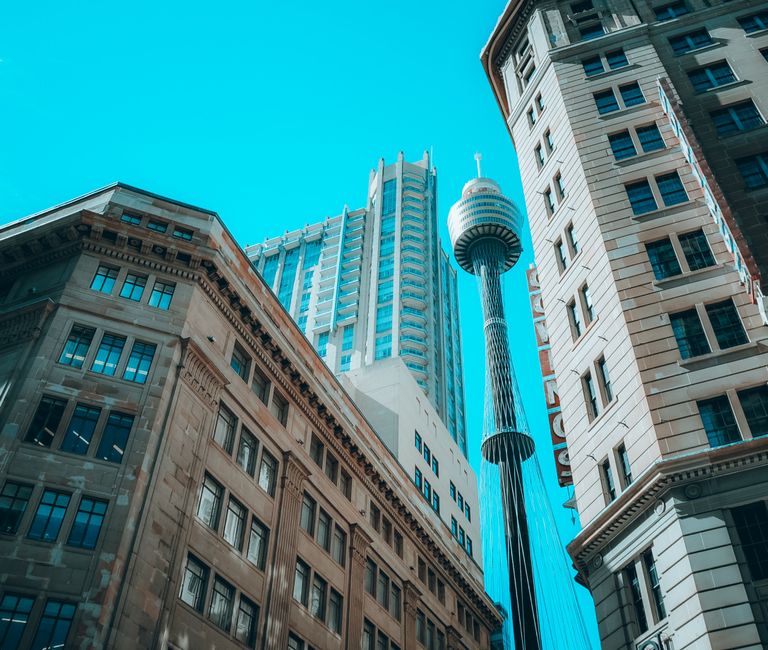
Empty Desks, Shifting Talent: How Tasmania's Office Downsizing is Reshaping Who Works Where
As major employers abandon traditional city-centre headquarters, Tasmania's job market is fragmenting into new hubs—and workers are voting with their feet.
Our reporters are based in Tasmania and cover local government, business and community. We are independently owned and editorially independent. Read our editorial standards →
The transformation is visible along Elizabeth Street. Where legal firms and accounting practices once clustered in heritage buildings commanding premium rents, real estate agents now advertise vacant floors at discounts unseen in a decade. This quiet exodus from Tasmania's traditional business core is triggering a profound realignment of the local talent market, forcing employers and workers to rethink where, and how, they want to work.
The numbers tell the story. Commercial vacancy rates in the CBD have climbed to 12.5 per cent—double the pre-pandemic average—while average office rents have softened from $380 per square metre annually to $310, according to recent commercial property assessments. Yet this isn't a simple contraction. Instead, it reflects a strategic dispersal that's reshaping Tasmania's entire employment geography.
Major employers are increasingly decentralising. Hobart's waterfront precinct has emerged as the primary beneficiary, with tech and creative firms gravitating toward converted warehouse spaces in Sullivans Cove. Similarly, satellite offices have sprouted in Sandy Bay and West Hobart, where younger workers and established professionals alike cite shorter commutes and proximity to lifestyle amenities as decisive factors. One prominent consulting firm recently relocated 40 per cent of its workforce to a shared workspace in Salamanca, citing employee retention improvements.
This spatial reorganisation carries profound implications for recruitment and talent retention. Candidates—particularly those aged 25 to 40—are increasingly treating location flexibility as a non-negotiable benefit. The traditional prestige of an Elizabeth Street address carries less weight when workers can secure comparable roles with better work-life integration elsewhere. Employers who cling to large, centralised footprints report higher attrition; those embracing distributed office models report improved candidate pipelines.
The ripple effects extend beyond individual businesses. Hospitality, retail, and services sectors anchored to the CBD are experiencing pressure as lunchtime foot traffic diminishes. Conversely, precincts like North Hobart and Glebe are benefiting from relocated workers establishing new local spending patterns.
Property owners face a reckoning. Older office buildings with inefficient layouts and limited amenities are struggling to attract tenants at pre-2020 valuations. Adaptive reuse—converting offices to residential or mixed-use—is gaining traction as an alternative strategy. One major landlord on Collins Street recently approved a conversion proposal targeting 60 residential apartments above ground-floor retail.
The message is clear: Tasmania's business landscape is no longer defined by a single gravitational centre. The talent market is following, and employers who recognise this shift earliest will retain competitive advantage in an increasingly fragmented employment ecosystem.
This article was compiled by AI from the sources linked above and screened before publishing. See our editorial standards.